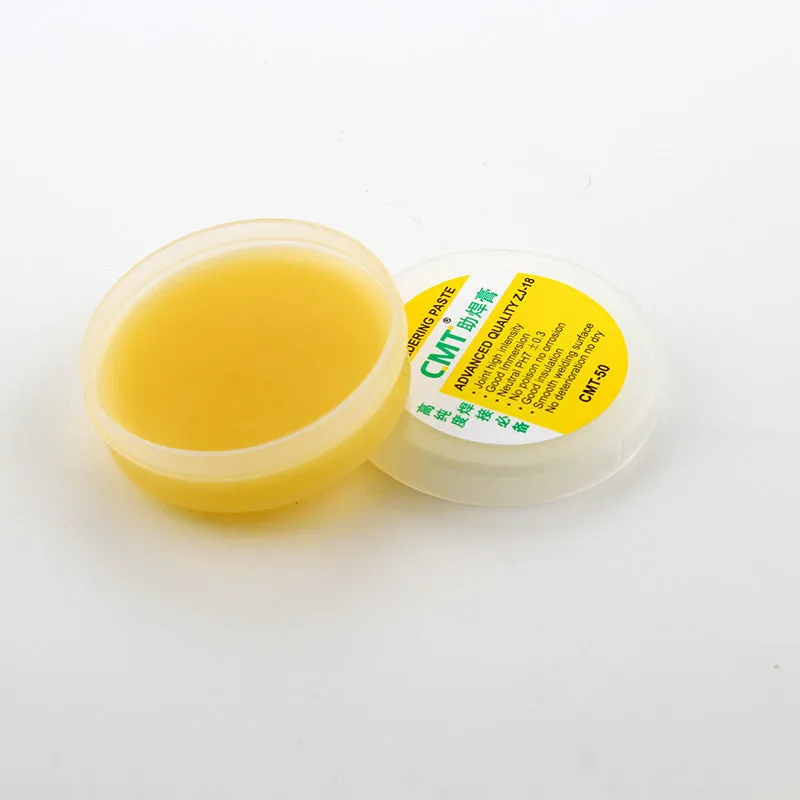
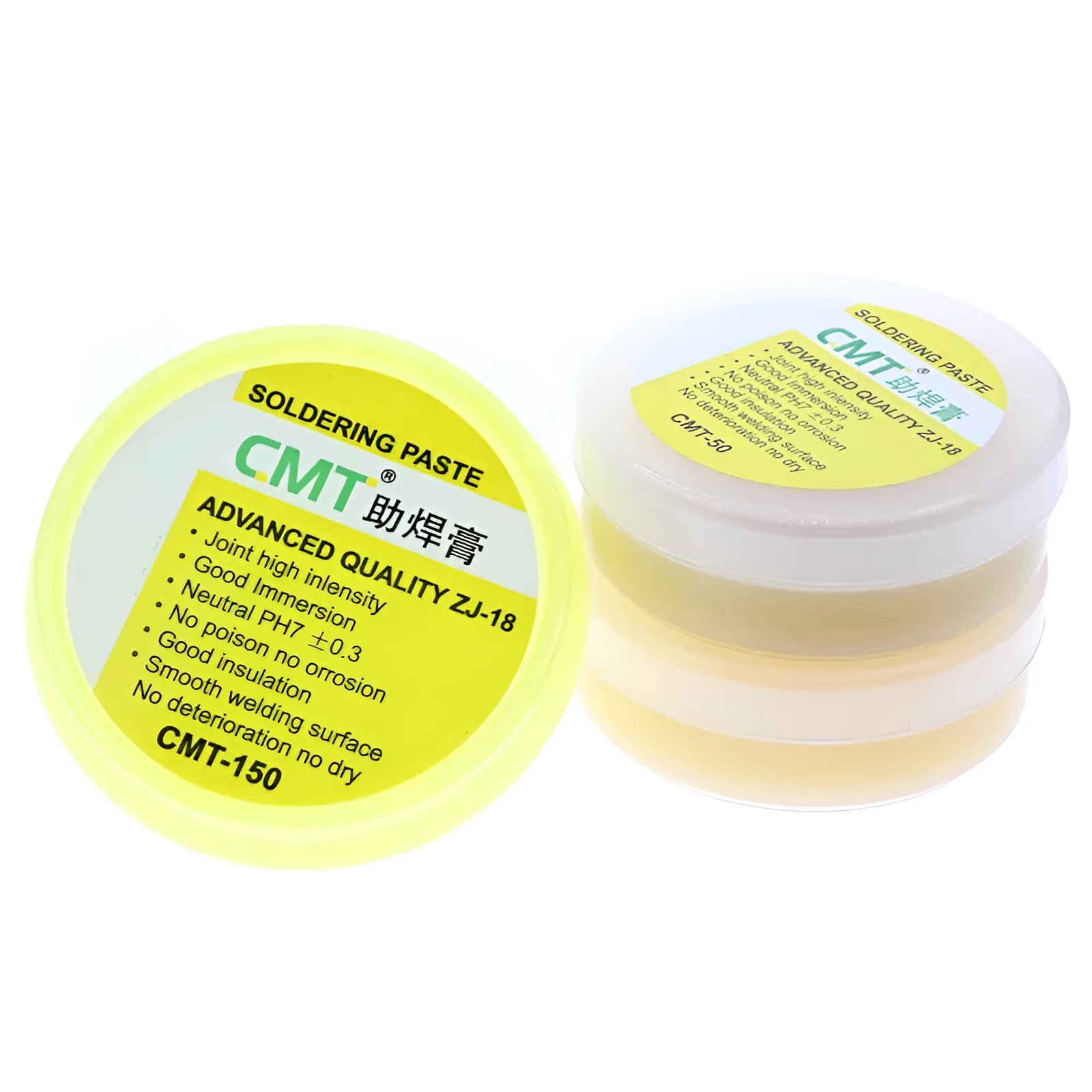
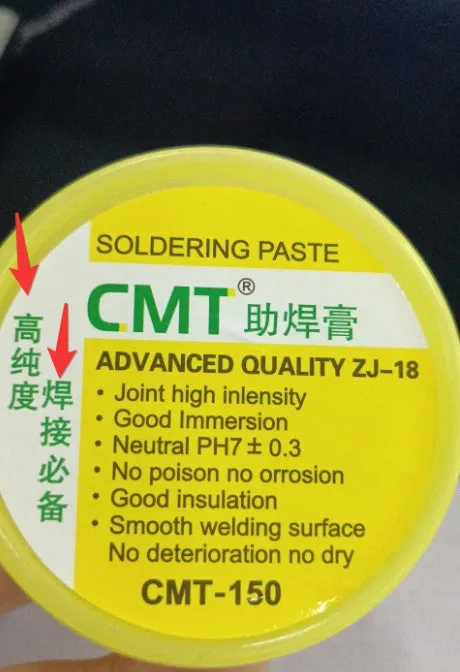
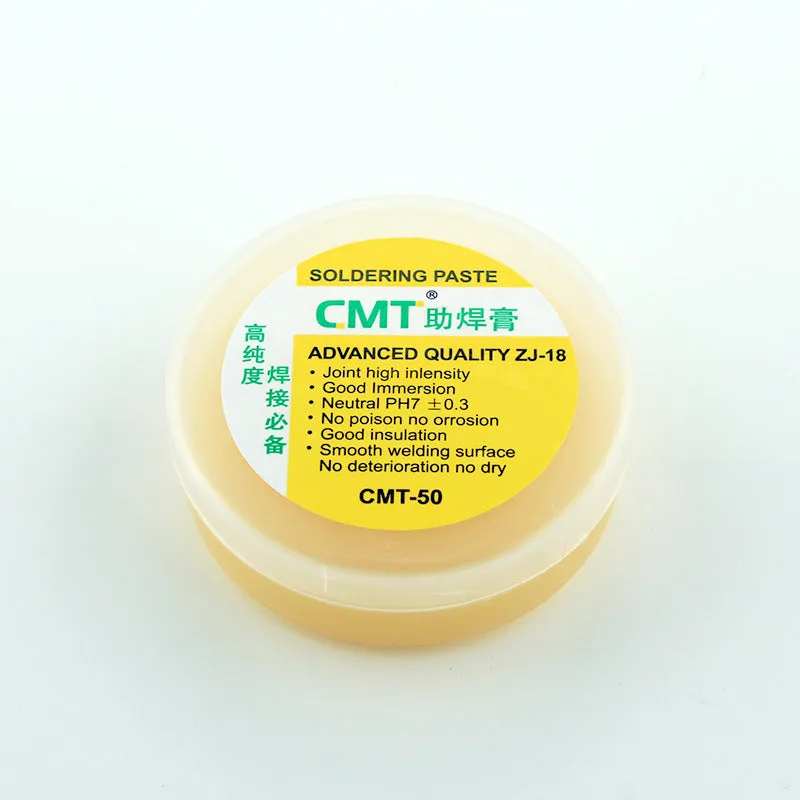
High purity rosin block soldering flux paste for electric soldering iron welding, available in CMT-50 paste flux (50g) and CMT-150 paste flux (85g) sizes, suitable for electronics assembly and repair work with operating temperature range of 280-380°C


High purity rosin block soldering flux paste for electric soldering iron welding, available in CMT-50 paste flux (50g) and CMT-150 paste flux (85g) sizes, suitable for electronics assembly and repair work with operating temperature range of 280-380°C
High purity rosin block soldering flux paste for electric soldering iron welding at 280-380°C

This soldering flux product provides essential auxiliary material for electric soldering iron work in electronics assembly and repair. Available in two distinct formats, the high purity rosin block formulation offers users flexibility in choosing between the CMT-50 paste flux containing 50g or the CMT-150 paste flux with 85g of material. Both options operate within the 280-380°C temperature range commonly used in electronic soldering applications, making them suitable for various electronics projects from small component repair to larger assembly work.
Features and Construction

The soldering flux comes in two specified weight formats designed to accommodate different project scales and usage frequencies. Both formulations share the same high purity rosin block composition and operating parameters.
Material and Build
This product uses a high purity rosin block soldering flux paste formulation designed specifically for electric soldering iron applications. The paste consistency facilitates application as a welding auxiliary material, though specific viscosity or additional material composition details beyond the rosin formulation are not provided in the source text. The flux functions within electronic soldering contexts where rosin-based fluxes are commonly employed for their fluxing properties.
Size and Practical Fit
Two distinct size options address different user needs: the CMT-50 paste flux contains 50g of material, while the CMT-150 variant provides 85g. These weight specifications allow users to select based on their anticipated usage volume and project frequency without making assumptions about duration or coverage area, as exact coverage metrics are not provided in the source material.
Uses and Placement

This soldering flux serves as auxiliary material for electric soldering iron welding across various electronics contexts. The 280-380°C operating temperature range aligns with common electronic soldering requirements.
Event or Professional Use
In professional electronics repair and assembly settings, the flux provides consistent performance within the specified temperature parameters. The two size options allow workshop managers to select appropriate quantities for their operation scale, with the 85g CMT-150 format potentially suiting higher-volume environments while the 50g CMT-50 version may serve smaller-scale or occasional professional applications.
Everyday Home Use
For home electronics enthusiasts and DIY repair work, the soldering flux assists with common soldering tasks on circuit boards, wiring connections, and electronic component repair. The temperature range accommodates standard soldering iron settings found in household tools, while the clear format options let users choose based on their project frequency without over-purchasing material.
Benefits and Buying Value
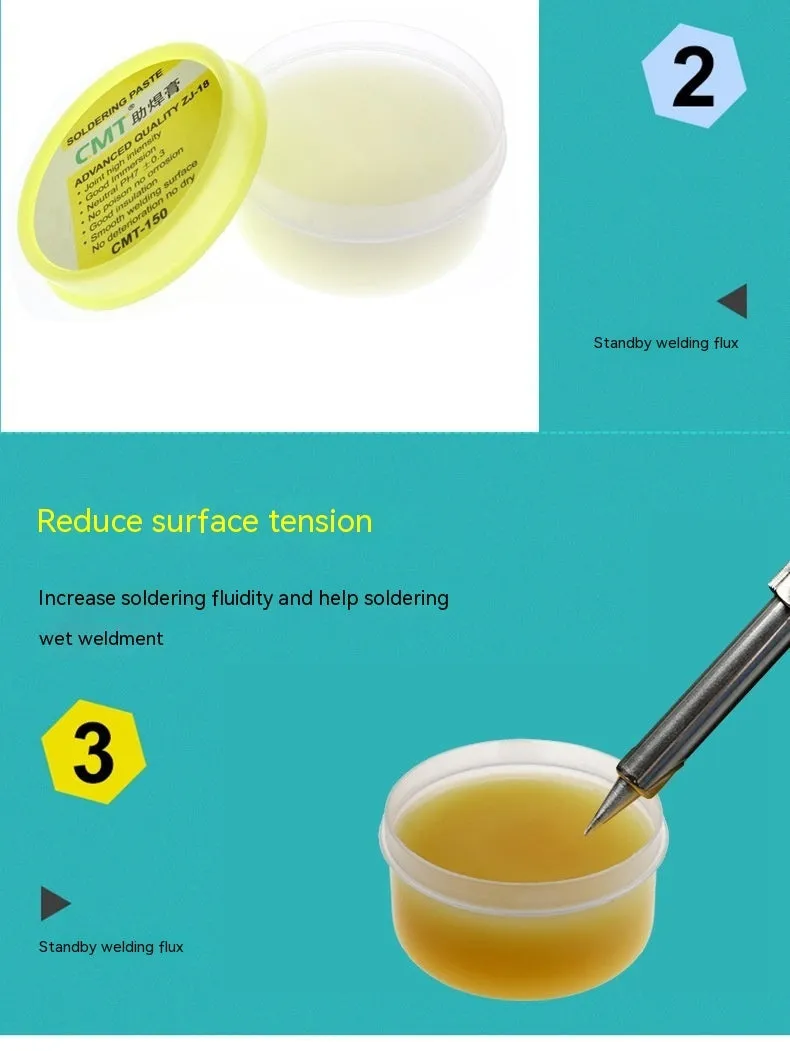
The product offers practical advantages through its specific formulation and size options, providing flexibility without unnecessary complexity.
Reuse and Low Maintenance
The sealed container format helps preserve the flux paste between uses, though exact shelf life or storage specifications beyond the basic packaging are not detailed in the source text. The product's design as a welding auxiliary material implies it functions as part of a soldering system rather than a standalone tool, working in conjunction with the user's soldering iron and technique.
Why Choose This Product
This soldering flux provides a straightforward solution for electric soldering iron welding with clear operating parameters and two practical size options. The specified temperature range of 280-380°C aligns with common electronic soldering requirements, while the high purity rosin block formulation offers standard flux properties for electronics work without making unsupported claims about performance characteristics beyond what the source text provides.