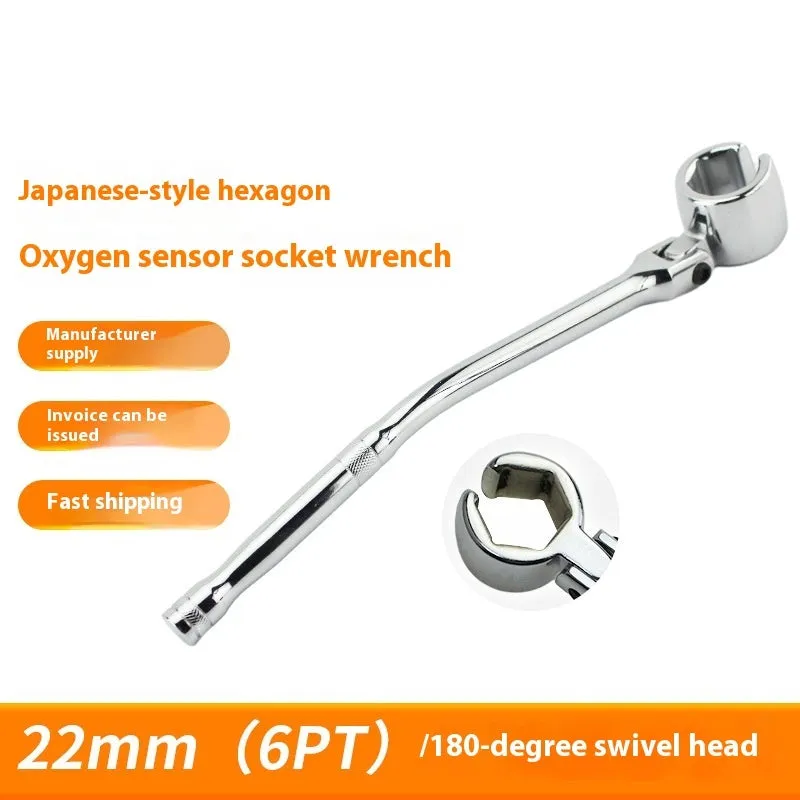
Oxygen sensor removal tool with 22mm hexagonal socket, crafted from chromium vanadium steel with bright chrome finish, featuring a poured head design and overall length of 270mm for automotive workshop applications


Oxygen sensor removal tool with 22mm hexagonal socket, crafted from chromium vanadium steel with bright chrome finish, featuring a poured head design and overall length of 270mm for automotive workshop applications
22mm Hexagonal Oxygen Sensor Removal Tool in Chromium Vanadium Steel
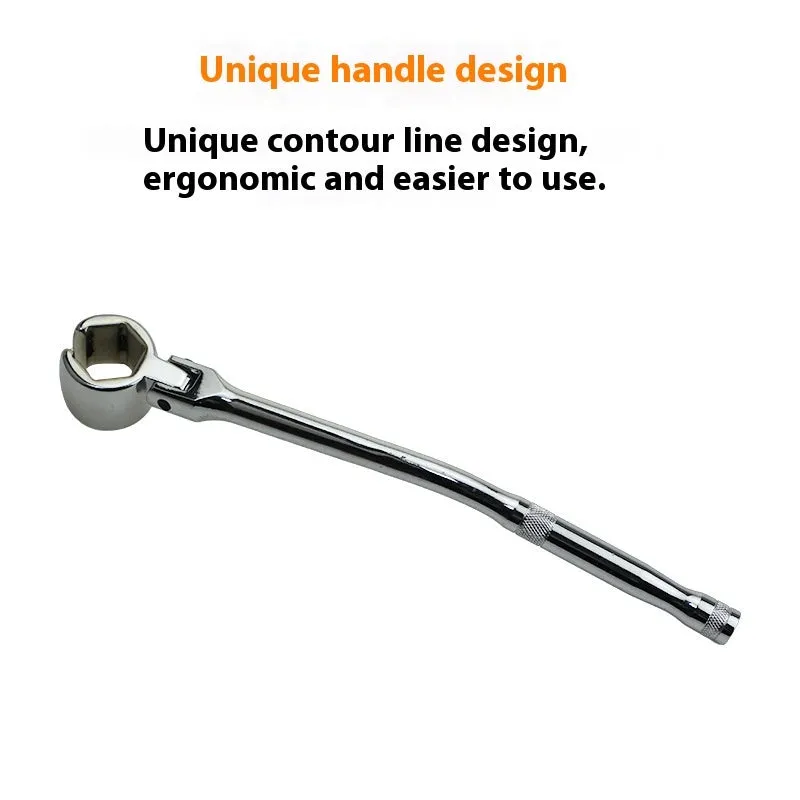
This specialised automotive workshop tool is engineered to tackle one of the more persistent tasks in vehicle maintenance: the removal of oxygen sensors. These sensors, often exposed to extreme heat cycles and road contaminants, can become firmly seized in their fittings. Standard open-ended spanners or adjustable wrenches frequently slip, risking damage to the sensor's delicate electrical components or rounding the sensor's hexagonal body. This dedicated tool provides a direct solution with its 22mm hexagonal socket, ensuring full-face contact for maximum torque transfer without slippage. Its design focuses purely on functional application, using robust materials and a straightforward build to deliver reliable performance in a garage environment.
Features and Construction
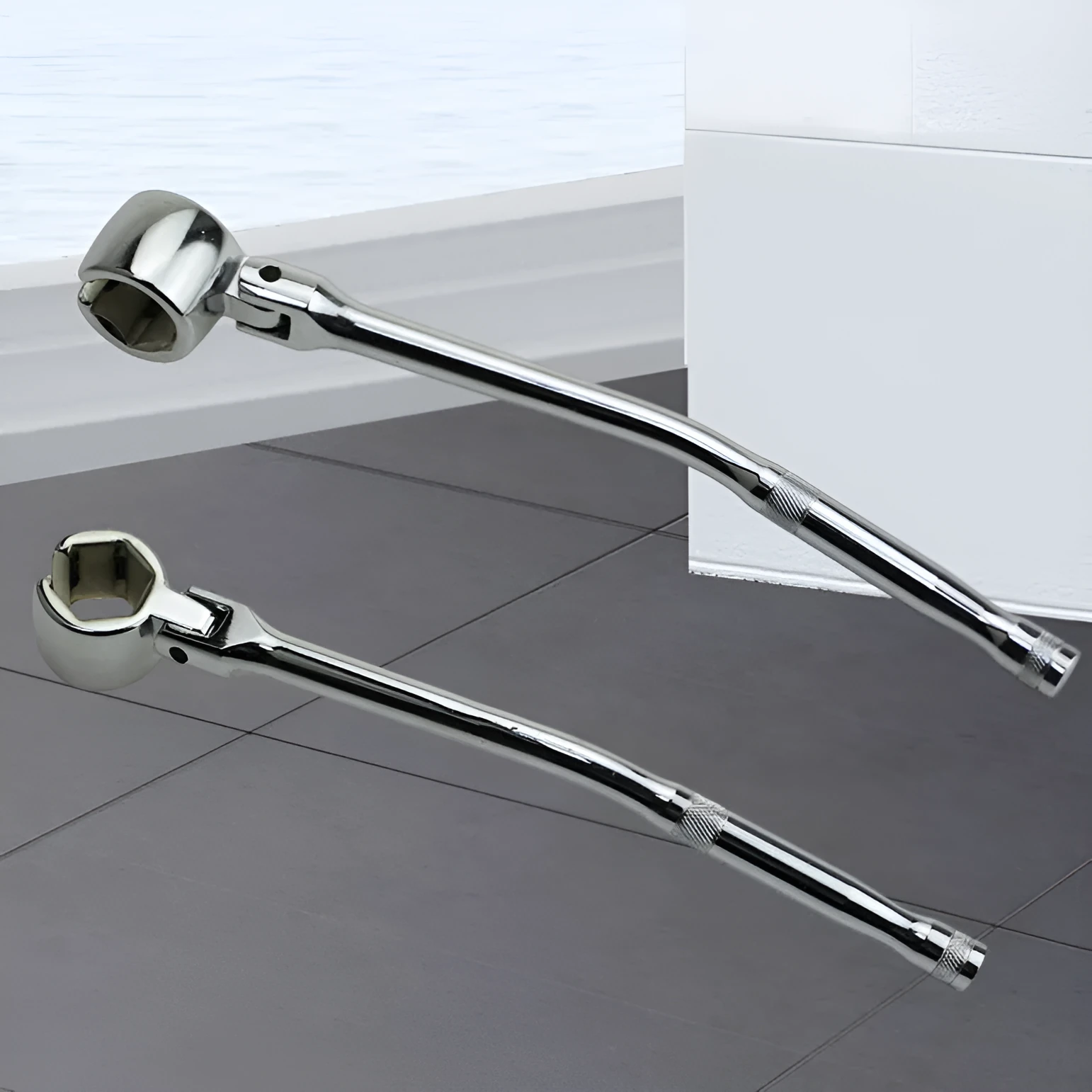
The tool's specification is defined by a set of clear, measurable attributes that dictate its performance and suitability. Each element, from the material choice to the manufacturing method, contributes to its role as a single-purpose, heavy-duty implement.
Material and Build
The core material is chromium vanadium steel, a common alloy in quality hand tools known for achieving a favourable balance between hardness and toughness. This composition allows the socket to withstand the high torsional stresses encountered when breaking a seized thread without cracking or deforming. The entire tool receives an overall bright chrome surface treatment, which serves as a barrier against oxidation and corrosion caused by workshop atmospheres, oils, and coolants. The manufacturing process is specified as head pouring, a technique where the socket head is formed, which contributes to the tool's structural consistency and load-bearing capability.
Size and Practical Fit
The defining functional specification is the 22mm hexagonal socket size, engineered to match the standard hexagonal opposite edge profile found on many oxygen sensor housings. This precise fit is critical; it eliminates play and distributes force evenly across the sensor's flats, preventing the rounding that leads to more complex removal procedures. The tool's total length is 270mm. This dimension is not arbitrary; it provides a substantial lever arm, multiplying the user's input force to generate the high breakaway torque often required without the need for excessive physical strain or additional cheater bars, which can be unsafe.
Uses and Placement

While its application is specialised, the tool's use case is clear and addresses a specific point of difficulty in both professional and advanced DIY settings. Its value lies in solving a narrowly defined but common problem efficiently.
Event or Professional Use
In a professional automotive workshop, time efficiency and avoiding job complications are paramount. This tool is deployed during exhaust work, engine diagnostics, or sensor replacement services. Its primary function is to cleanly remove an old, seized oxygen sensor to allow for a new unit's installation. The secure fit minimises the risk of damaging the sensor's shell or the threads in the exhaust manifold or downpipe, which could turn a standard replacement into a costly, time-intensive repair involving thread chasing or helicoil inserts. For mechanics, it is a problem-avoidance tool that supports a smooth workflow.
Everyday Home Use
For the committed home mechanic undertaking their own vehicle maintenance or repair projects, accessing tools designed for specific, tough jobs can be the difference between success and frustration. This removal tool provides a dedicated, correctly sized solution for a task where improvised methods often fail. It is suited for garage use by individuals performing their own emissions-related repairs, engine swaps, or exhaust system upgrades on cars, motorcycles, or light trucks where oxygen sensors are present. It serves as a purposeful addition to a comprehensive toolset.
Benefits and Buying Value

The tool's value proposition is rooted in practical outcomes: reliable task completion, risk reduction, and long-term utility within its defined scope. It offers a direct return on investment through repeated, successful use.
Reuse and Low Maintenance
As a solid metal tool designed for a repetitive mechanical task, its inherent value is reusability. Unlike consumable parts, it is bought once to perform the same specific job across multiple vehicles or over many years. Maintenance is minimal; simple post-use wiping to remove grime and storage in a dry toolbox or drawer will preserve the chrome finish and functional readiness. Its durability is a direct function of its stated chromium vanadium steel construction and robust build, meaning it should remain serviceable for the long term under normal workshop conditions.
Why Choose This Product
The decision to select this tool over a generic alternative hinges on the need for certainty and damage prevention. It provides a known, correct interface (22mm hex) for a known problem (seized oxygen sensor). The extended 270mm length is a built-in advantage, offering immediate leverage without requiring additional equipment. For anyone who anticipates needing to remove an oxygen sensor more than once, or who wishes to be properly equipped for the attempt, this tool represents a focused, fit-for-purpose solution that aligns the correct specification with the actual demand of the task.