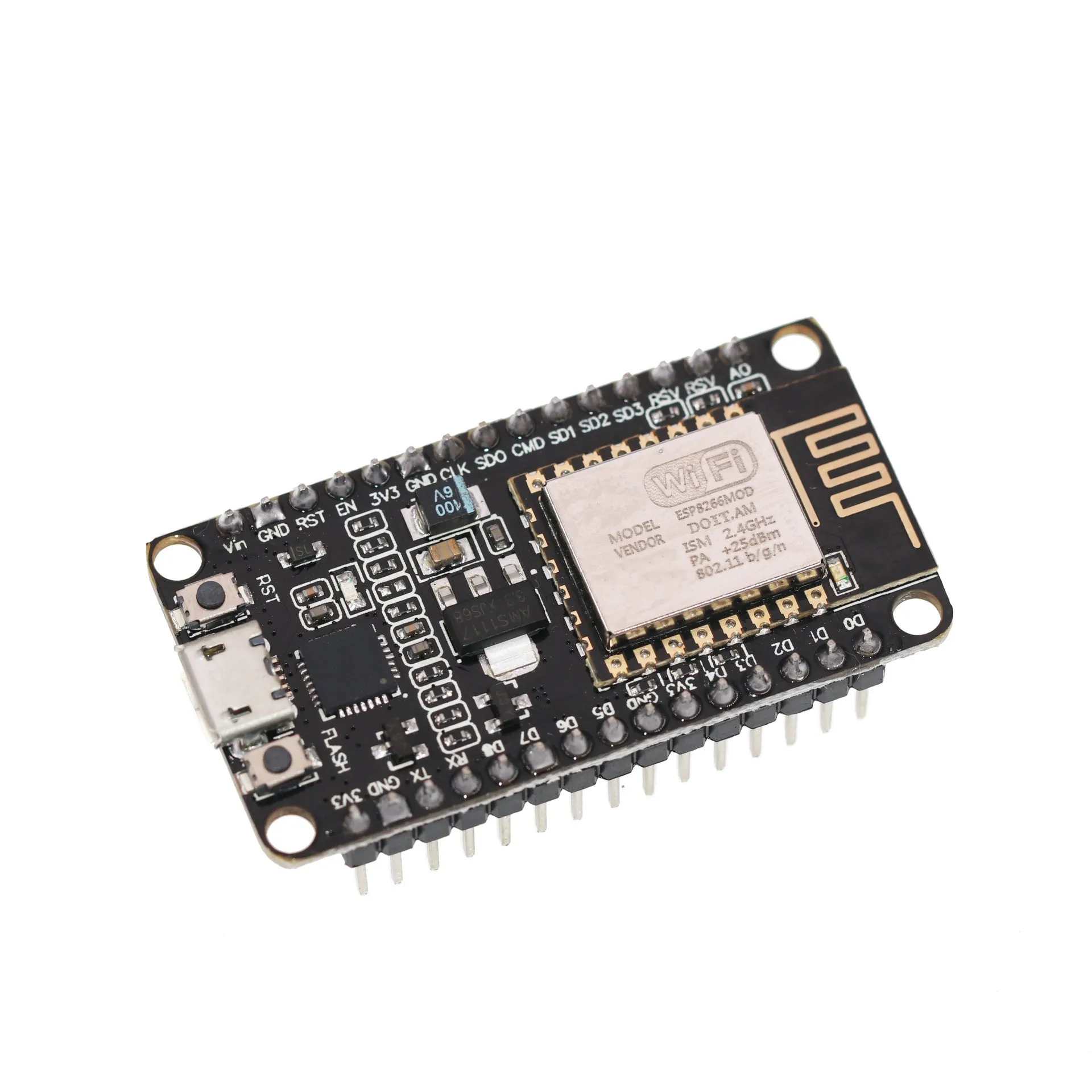
NodeMcu Lua WIFI Development Board based on ESP8266 with CP2102 USB interface, an open-source programmable microcontroller for IoT applications, featuring event-driven network APIs and Arduino-like hardware IO.


NodeMcu Lua WIFI Development Board based on ESP8266 with CP2102 USB interface, an open-source programmable microcontroller for IoT applications, featuring event-driven network APIs and Arduino-like hardware IO.
NodeMcu Lua WIFI Development Board with ESP8266 and CP2102 for IoT Projects

The NodeMcu Lua WIFI Development Board provides a practical, low-cost foundation for building Internet of Things applications. Based on the popular ESP8266 system-on-chip, this open-source board integrates Wi-Fi connectivity directly onto a programmable microcontroller platform. It is designed to streamline the development process for makers, students, and professionals working on smart devices, sensors, and networked hardware. The board supports interactive programming in the Lua scripting language, which can reduce the complexity typically associated with embedded systems development. By combining familiar Arduino-like hardware input/output with advanced network APIs, it offers a versatile tool for creating connected prototypes without extensive electronics expertise.
Features and Construction
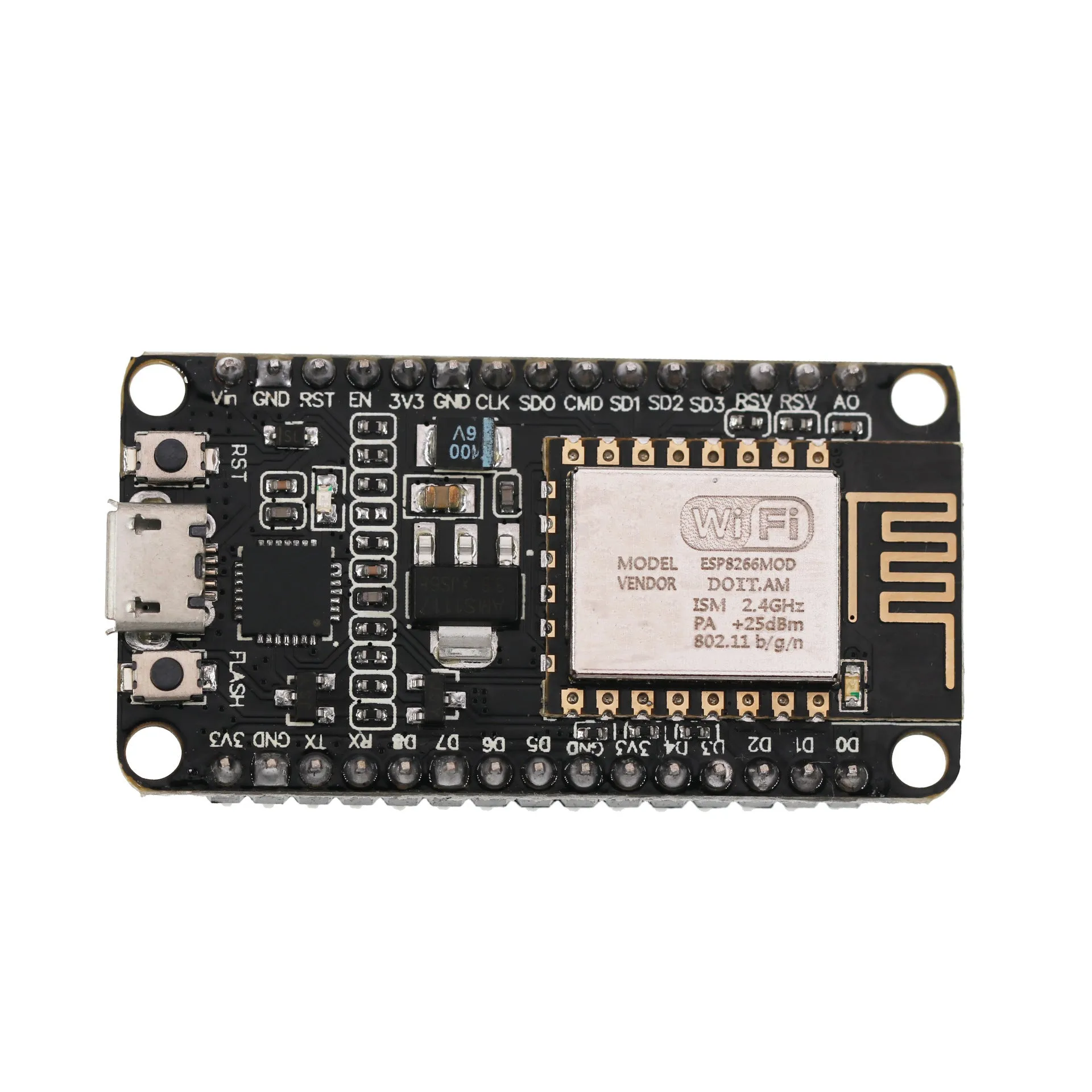
This development board is built around core components that deliver its functionality for IoT development. The construction focuses on providing the necessary interfaces for both programming and physical world interaction.
Material and Build
The board is constructed using standard electronic manufacturing techniques, with the ESP8266 microcontroller and a CP2102 USB-to-serial interface chip as its central components. The CP2102 chip handles communication between the board and a development computer, replacing the CP2102 as noted in the source. This setup allows for code uploads and serial communication essential for debugging and monitoring. The open-source nature of the platform means schematics and design files are available for further customisation or integration into larger projects.
Size and Practical Fit
The microcontroller unit at the heart of the board has a compact footprint measuring 5mm by 5mm, contributing to the overall small form factor of the development board. This size makes it suitable for projects where space is a consideration, allowing it to be incorporated into enclosures or prototype setups without occupying excessive room. The standard pin layout and form factor follow common development board conventions, ensuring compatibility with breadboards, jumper wires, and many common shields or accessory boards designed for microcontroller prototyping.
Uses and Placement

The NodeMcu board's capabilities make it applicable across a range of scenarios, from educational settings to functional deployed devices. Its design bridges the gap between simple microcontroller projects and network-connected applications.
Event or Professional Use
For professional prototyping or event-driven network applications, the board's API set is a significant advantage. The event-driven network API facilitates writing server-client applications, web services, or MQTT clients in a style reminiscent of Node.js. This can dramatically speed up development cycles for IoT products, smart home gadgets, or industrial monitoring systems. The ability to interactively program in Lua without a full compile-and-flash cycle for each change supports an iterative, fast-paced development workflow ideal for testing concepts and refining functionality.
Everyday Home Use
In home automation and DIY smart device projects, this board serves as a capable controller. It can manage Wi-Fi-connected sensors, actuators, and displays for purposes like environmental monitoring, lighting control, or security systems. The Arduino-like hardware IO means users familiar with that ecosystem can apply existing knowledge to connect buttons, LEDs, motors, and common sensor modules. The Lua scripting environment lowers the barrier to entry compared to lower-level languages, making it accessible for hobbyists looking to add intelligence and connectivity to their projects.
Benefits and Buying Value

Choosing this development board offers specific practical advantages centred on workflow efficiency and project versatility. Its value lies in reducing development friction for connected devices.
Reuse and Low Maintenance
The board supports a reusable development process. The interactive Lua environment and the feature that eliminates the need for constant resetting during code downloads contribute to a smoother, less interrupted workflow. This can reduce time spent on repetitive tasks like re-flashing or rebooting, allowing developers to maintain focus on application logic. The hardware itself is robust enough for repeated programming cycles in a development context, and the open-source platform ensures long-term access to community resources and documentation for troubleshooting and enhancement.
Why Choose This Product
This NodeMcu board is a strong choice for anyone needing a Wi-Fi-enabled microcontroller that balances capability with ease of use. It consolidates several useful features: the connectivity of the ESP8266, the programming accessibility of Lua, the hardware familiarity of Arduino-like pins, and the development speed of event-driven network APIs. It arrives ready to use with the CP2102 interface installed, requiring only a USB cable and computer to begin programming. For developers, students, or makers entering the IoT space or seeking a efficient platform for prototypes, it provides a comprehensive, integrated solution that avoids the complexity of assembling and configuring separate Wi-Fi and microcontroller modules.